Externe Dienstverlening + Autisme Steunpunt
Introducing Kio Onderwijspartners
Externe Dienstverlening and Autisme Steunpunt have joined forces. Together, as Kio, we help schools with complex support needs – whether it’s about one pupil, a class or a whole staff team.
Kio Onderwijspartners is part of SSOE, an Eindhoven-based foundation for special education and expertise centres.
In the meantime, our current websites are still available
We’re working on a new website. Until it launches, you’ll find our services, case studies and information about ongoing support on our current websites (in Dutch). To ask for support, please use the request form on this page.
Externe Dienstverlening
Support, coaching and training grounded in specialist education, for schools across the region.
Autisme Steunpunt
Specialist expertise and support on autism in the classroom, for teachers and school teams.
Request support
Tell us how we can help
You don’t need to know which kind of expertise is required. Just tell us what’s going on and we’ll work out the right approach together.
Before involving us, schools ask parents for consent for our support and for access to their child’s file. We handle the information you share with care. Please read the SSOE privacy statement (in Dutch).
Who would you like support for?
Support for your child is arranged through the school
Kio works at the request of schools, school boards and regional education partnerships. If you think our support could help your child, have a chat with the school's SENCo (in Dutch: intern begeleider or ondersteuningscoördinator). They can get in touch with us directly.
We always involve parents in our work – after all, nobody knows your child better than you.
Other questions about special education?
The guide covers enrolment, costs and support. You can also contact the parent support service of your regional education partnership.
Building on what works
Kio brings together the knowledge and experience of Externe Dienstverlening and Autisme Steunpunt, within SSOE. Continuity is our priority.
What stays the same
- Any support already underway will continue as normal.
- You’ll work with the same specialists and benefit from the same expertise in specialist education.
- We remain part of SSOE.
What’s changing
- One name and one point of contact for schools – no need to work out in advance which expertise you need.
- We take a broader view, looking at the pupil, the class, the teacher and the whole team.
- Soon, you’ll find everything on one new website.
Knowledge only matters when you can put it into practice
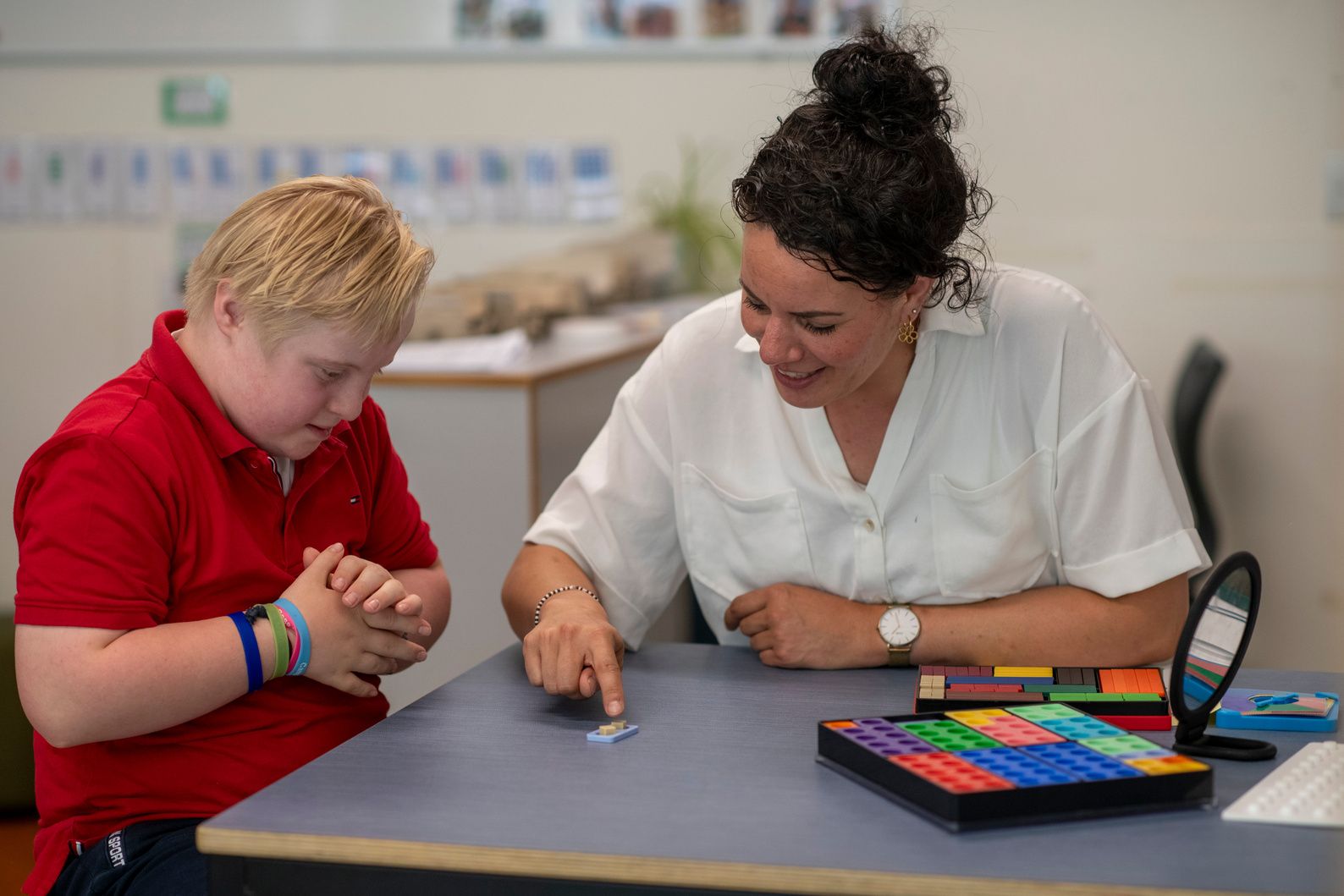
Every school is different, and so is every pupil. A pupil may need a different approach from their teacher, a class may become unsettled, or a team may be unsure how best to respond.
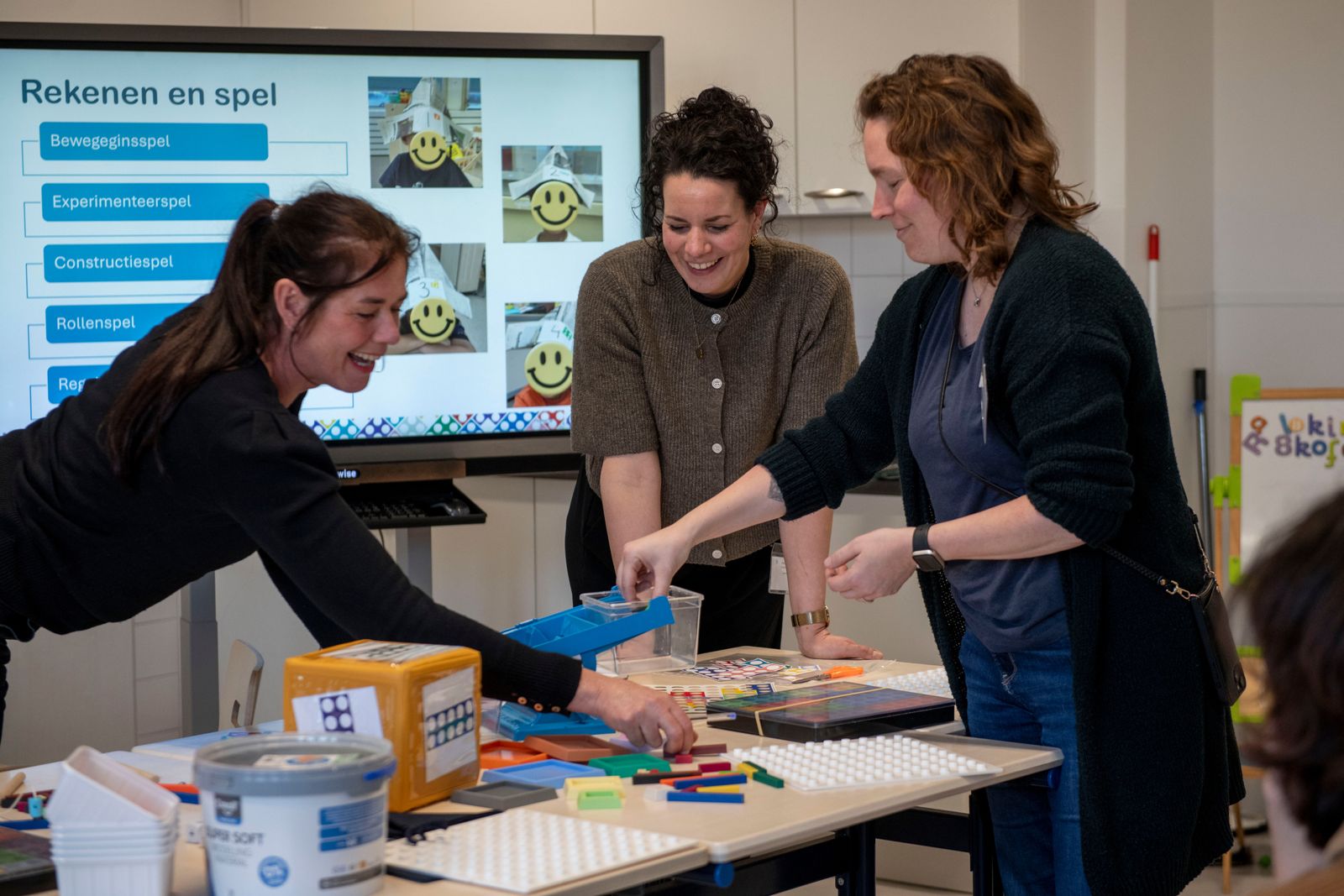
That’s where we come in. Not as outsiders telling you what to do, but as a partner who brings specialist knowledge right into everyday practice – into the school, into the classroom and to the people who work there every day.
We start with what's happening
Not with what we offer, but with the school's question. Together, we work out what's needed.
Our expertise comes from practice
Experience from specialist education, applied to the day-to-day challenges schools face.
Pupil, class and team go hand in hand
Sometimes a pupil needs one-to-one support. Sometimes the biggest gains come from working with the class or the team.
Stronger schools, for the long term
We've only succeeded when a school can carry on confidently without us.
For us, the value of knowledge lies not in what we know, but in what schools can do with it.
Kio Onderwijspartners
Guide
A guide for parents and schools
Practical information on the topics that matter most for pupils in (special) education – from enrolment and costs to support for autism or a disability.
- Enrolment
- Finances
- Autism
- Physical and functional disabilities
- Intellectual disability
- International families
- Complaints
Enrolment
How to enrol your child in special education, the admission statement (TLV) and finding the right school.
Enrolling your child in special education
Start by contacting the school you have in mind. They will look at whether the school is a good fit for your child. To be admitted, your child will also need an admission statement for special education (toelaatbaarheidsverklaring, or TLV). This is issued by the regional education partnership (samenwerkingsverband), which decides whether your child needs the support that special education offers.
Thinking of one of the SSOE schools? SSOE has a shared admissions policy to make sure places are allocated fairly and transparently.
- SSOE pupil admissions policy (pdf) (in Dutch)
- Enrolment at MBS Eindhoven (in Dutch)
- Enrolment at the Antoon van Dijkschool (primary special education) (in Dutch)
- Enrolment at the Van Dijkcollege (secondary special education) (in Dutch)
- Enrolment at Mytylschool Eindhoven (in Dutch)
General information on rijksoverheid.nl (in Dutch)
Applying for an admission statement (TLV)
Any child moving to special education, special primary education or practical education needs an admission statement (TLV). It’s the school, not the parents, that applies for it. In the application, the school sets out the support the pupil needs. Once all the paperwork is together, the school sends the application to the regional education partnership, where a panel of experts reviews it. Applications are occasionally turned down.
More information on rijksoverheid.nl (in Dutch)
Enrolling your child at an SSOE school
SSOE has a shared admissions policy to make sure places are allocated fairly and transparently. If you’d like to enrol your child at one of the schools, please read the general policy first, followed by the school’s own enrolment procedure.
- General SSOE pupil admissions policy (pdf) (in Dutch)
Any questions? Email secretariaat@ssoe.nl.
Regional education partnerships
Every school belongs to a regional education partnership (samenwerkingsverband) that organises support for pupils in its area. The partnerships in this region:
Primary education
- PO 30-05 De Meierij
- PO 30-06 Oss-Uden-Veghel
- PO 30-07 Eindhoven, Samen voor kinderen
- PO 30-08 Helmond-Peelland
- PO 30-09 Valkenswaard, Veldhoven and surroundings (Kempen)
- PO 31-01 Noord-Limburg
- PO 31-03 Weert, Nederweert
Secondary education
Schools in this region
The website Scholen op de kaart gives a complete overview of the schools near you.
Go to Scholen op de kaart (in Dutch)
Duty of care (zorgplicht)
Every school in the Netherlands has a duty of care. This means the school will help you find a suitable place for your child – either at that school or elsewhere. The school first looks at whether your child can get extra support in the classroom, based on its support profile. If it can’t offer a suitable place itself, it will find another school within the regional education partnership.
Ideally, you and the school look for the right place together.
Finances
School costs, parental contributions, liability for damage and financial support.
School fees and voluntary parental contribution
School fees
Special (secondary) education is free of tuition fees. Parents do pay for other things themselves, such as books, materials and childcare.
- Costs of primary education (rijksoverheid.nl) (in Dutch)
- Costs of secondary education (rijksoverheid.nl) (in Dutch)
Voluntary parental contribution
We believe every pupil should be able to take part in every activity, so SSOE schools don’t ask for a voluntary parental contribution. Occasionally a contribution is requested for a specific activity, which can then only go ahead if the costs are covered.
Liability for damage
SSOE aims to provide a safe, inclusive and ambitious learning environment for pupils, staff and visitors. Its policy on liability and insurance is summarised below.
What does liability mean?
Being liable means you are legally responsible for damage, and the person who caused it has to pay for it.
When is the school liable?
The school is only liable if it has fallen short – in other words, if damage was caused because the school didn’t do something properly. If the school acted correctly, it isn’t liable and the damage won’t be covered.
What to do in case of damage or an accident at school or during a school activity
- Contact the head of the school or service straight away.
- You will receive a damage report form.
- Fill in the form yourself.
- Send the form to the SSOE school board, Venetiëstraat 43, 5632 RM Eindhoven.
The insurer decides whether the damage will be compensated.
If your child causes damage
If your child breaks something belonging to someone else or to the school, you as a parent or carer may be liable. That’s why personal liability insurance (AVP) is important.
- Up to the age of 14, parents are fully liable.
- From 14 to 16, parents and child are jointly liable.
- From the age of 16, the pupil is liable.
We strongly recommend checking your liability insurance and updating it if necessary. It’s the insurer, not the school, that decides who pays.
Children’s belongings
The school is not responsible for pupils’ belongings such as phones, glasses, clothes, jewellery and bikes, and won’t pay out if they are lost, damaged or stolen.
When is the school insured?
The school’s insurance covers school hours, the playground and activities such as school trips, sports days and camps. An excess may apply, meaning part of the cost isn’t covered. The school will help you report any damage.
Accident insurance
Pupils, staff and volunteers are covered by accident insurance, which pays a fixed sum in the event of permanent injury or death. It doesn’t cover all costs, and a payout doesn’t mean the school was at fault.
In summary
- The school only pays for damage if it did not act properly.
- You are responsible for your child’s belongings.
- Parents are usually liable for damage caused by their child.
- Parents arrange their own personal liability insurance that suits their child’s age.
The full Liability and Insurance policy is available from the school or the SSOE head office.
Applying for financial support for your child
If you need financial help for a child with additional support needs, there are several schemes available. The Dutch Ministry of Health, Welfare and Sport (VWS) has more information.
- Personal budget (PGB) (in Dutch)
- Long-term Care Act (Wlz) (in Dutch)
Your child turns 18
SSOE schools regularly hold information evenings about what changes when your child turns 18. Most of this information is also available in an overview document.
- Points to consider when your child turns 18 (pdf) (in Dutch)
- More information on rijksoverheid.nl (in Dutch)
Autism
Kio expertise
Support with autism at school, plus organisations offering information and practical tips.
Kio and autism in education
Kio Onderwijspartners advises, coaches and supports teachers, school teams and SENCos on autism in education. We work with schools within roughly 40 to 45 kilometres of Eindhoven.
Does your school have a question about a pupil, group or team? Use the online request form.
Support for a child with autism
Autism isn’t visible from the outside, but you may notice that your child reacts to situations differently from other children. Autism affects things like how information is processed, communication and coping with change.
Looking for support outside school, or for information and tips on supporting a child with autism? These websites (mostly in Dutch) are a good place to start:
- Dutch Autism Association (NVA)
- NVA Noord-Brabant/Zeeland
- Autism and the young child
- De ASSWijzer
- Wegwijzer Autisme
- Autism partnership South-East Brabant (SVA)
- Balans, association for parents
- Network for women and girls with autism
- Expertise team autism and inclusive society
- Sensonate
- Gesprekshulp
- Werk Web Autisme
- Autiroze
Physical and functional disabilities
Kio expertise
Pupils with a physical or motor disability or an illness, such as CP, DCD, ABI, EDS or MUPS.
Medical conditions in education
How can we help pupils with motor difficulties – whether caused by a physical disability, illness, an accident or delayed development – to reach their full potential and become as independent as possible?
Kio supports pupils whose fine or gross motor difficulties get in the way of everyday school life. Working with mainstream schools, we make sure that children and young people who need tailored education because of an illness or disability can keep progressing, both academically and socially.
Examples of conditions:
- Cerebral palsy (CP)
- Spina bifida (SB)
- Cancer
- Juvenile arthritis (JIA)
- Muscular diseases
- Developmental coordination disorder (DCD)
- Acquired brain injury (ABI)
- Medically unexplained physical symptoms (MUPS)
The SBH website (in Dutch) has a lot of information about children with a physical disability. SBH is an organisation of and for people with a congenital physical disability.
Developmental Coordination Disorder (DCD)
DCD stands for Developmental Coordination Disorder. It becomes apparent as a child develops and can only be diagnosed from about the age of 5. Because there are no clear outward signs, children often meet with a lack of understanding. Their clumsiness can lead to feelings of inadequacy and frustration, so they take part less often in physical and social activities.
The diagnosis
Pupils with DCD find it hard to learn and perform motor skills, both gross and fine, and do so noticeably less well than their peers. Motor skills cost them a lot of physical and mental effort, often leading to fatigue and slowness. No underlying medical cause is found. Pupils with DCD often perform below their level: they complete about 66% of the work in the time other pupils finish everything.
Cause
DCD is usually seen as a sign of a nervous system that has not developed optimally. There is no consensus on the causes; hereditary factors and problems around birth are mentioned. The diagnosis shows that something is going on, not what. Children with DCD are therefore a very diverse group.
Diagnosis
Within the Dutch national DCD network it has been agreed that only a rehabilitation physician or a doctor trained for this may diagnose DCD, preferably in a multidisciplinary team.
Impact at school and some advice
- Assume the pupil can’t, not that they won’t. Be open and understanding, and make sure colleagues and others involved know about the condition and what it means.
- Explain it to the rest of the class.
- A pupil with DCD may face new challenges at every stage. The motor difficulties won’t go away, but you can work on ways of managing them. It helps if children create their own ‘user manual’ and learn to recognise and make the most of their strengths.
Kio has the expertise to advise and support the school, the pupil and the parents. Use the online request form. Read more about DCD at parents’ association Balans (in Dutch).
Acquired brain injury (ABI)
What is ABI?
ABI is an umbrella term for any abnormality or damage to the brain that occurs after birth as a result of an illness (non-traumatic) or an accident (traumatic). Typically there is a break in the course of life: life before the injury is fundamentally different from life after it. Some things work, others do not. Physical limitations are often immediately visible. The invisible consequences, such as cognitive and social-emotional problems, often only emerge later and frequently have the greatest impact.
Consequences and approach at school
Every pupil with ABI is different, depending on the area of the brain that is affected. At school we often see that these pupils cannot concentrate for long, process information more slowly, struggle with memory tasks and with too many stimuli, cannot do two things at once, and tire quickly, both physically and mentally.
A basic piece of advice is the PRET strategy:
- Pause: living with ABI takes a lot of energy. Agree regular short breaks with the pupil.
- Restful environment: avoid too many stimuli, for example by letting the pupil wear headphones while working.
- One thing at a time: let the pupil do tasks one by one.
- Tempo: adjust the pace and don’t set the bar too high.
Ask the parents to keep you well informed about the results of medical and neuropsychological assessments, and use them as the basis for a plan at school.
Kio has the expertise to advise and support the school, the pupil and the parents. Use the online request form. Read more about ABI at the Dutch Brain Foundation (in Dutch).
Ehlers-Danlos syndrome (EDS)
“Daan has just been diagnosed with EDS with hypermobility. I’m not supposed to let him walk too much, because it’s too tiring and painful for him. But when I ask the class who wants to switch off the light, Daan is already at the switch. How do I get him to move less when he wants to move so much?”
Daan has a strong urge to move. Getting the amount of movement right will be quite an art: not moving is not good, but too much is not good either. Pain and fatigue can appear within minutes. Make agreements with Daan: when is moving feasible, and for how long?
What is EDS?
EDS stands for Ehlers-Danlos syndrome: a group of conditions in which connective tissue has not developed properly. Connective tissue is found wherever the body needs support, such as the ligaments around joints and between the skin and the layer beneath. Symptoms and severity vary widely. There are eight types. In the classic type, the skin is stretchy and velvety and the joints are hypermobile. The skin is fragile, tears easily and bruises quickly, so be careful with plasters.
Characteristics and approach
The joints are unstable and can easily (partially) dislocate. Balance may be affected, so be alert during PE, for example with balance exercises, swinging on rings and jumping down from a height. EDS affects stamina and fitness; pain and fatigue often recur. If needed, build in one or more rest moments each day. EDS also affects social-emotional development, such as accepting limitations, guarding one’s own limits and play.
Stay alert and show your pupil that you see and hear them. Make agreements, offer a responsible moment of movement now and then, and draw up a plan and an emergency protocol with the pupil and parents in case of an accident or fall.
Kio has the expertise to advise and support the school, the pupil and the parents. Use the online request form.
Medically unexplained physical symptoms (MUPS)
Julia ‘just’ had the flu, but has been severely tired for months. Esther is often at home with stomach aches that nobody can explain. Bas only manages a few hours at school before his headache becomes too bad. Do you recognise a pupil like this, whose absence from school is becoming serious?
This is MUPS
Physical symptoms can develop suddenly or gradually, and usually fade by themselves. For these pupils that does not happen: recovery is disrupted. With MUPS (in Dutch: SOLK), physical symptoms last longer than a few weeks and proper medical examination finds no condition that sufficiently explains them.
Requests for support for these pupils are increasing. The key messages:
- Explained or unexplained does not matter: take the symptoms seriously.
- Body and mind cannot be separated.
- Recovery is the norm.
- School has its own role in recovery.
Treatment usually starts with the GP, often followed by a hospital or mental health care, and sometimes a specialised (rehabilitation) centre. The aim is recovery from the symptoms (less often, less severe, shorter) and recovery of functioning, including (gradually) returning to school.
School supports recovery by increasing safety, social acceptance and appreciation, with a tailored plan.
What Kio offers the school
Process support
- Working together with everyone involved.
- Consulting the practitioner about what the pupil can manage, and the dos and don’ts.
- If the practitioner does not advise on this, estimating together with the pupil and parents what is possible.
- Safeguarding education: is the pupil in the right place? Recovery takes energy.
- Keeping the connection with school and class: agreements on communication and expectations.
- A return plan with a timetable that supports recovery. Achievable means success.
- Ensuring continuity, including in the next school year.
Coaching the pupil
- Someone the pupil trusts and can turn to with questions and worries.
- Reviewing the timetable weekly or fortnightly and gradually extending it where possible.
- Learning to follow health advice and to speak up about what they need and where their limits lie.
Professional development for teachers
- Coaching teachers so they can take on the role of personal coach.
- An explanation during a team meeting.
- A workshop.
Use the online request form.
Metabolic disorders
Do you have a pupil with a metabolic disorder? Our specialists offer advice, support and help to education professionals and pupils.
What is a metabolic disorder?
Food is broken down in the digestive tract and nutrients are absorbed into the body’s cells. Inside the cell, thousands of enzymes, each with its own task, take care of metabolism. If an enzyme does not work properly or is missing, too many harmful substances are produced, or too few of the substances the body needs. This is called a metabolic disorder. Each enzyme defect has different consequences.
How do you recognise a metabolic disorder?
Symptoms can appear shortly after birth, but also later or only in adulthood. Examples are developmental or growth delay, fatigue, coma and epilepsy. The course varies greatly: with some disorders a person can grow up normally, for example by following a diet; others have an unpredictable or progressive course and can cause serious disabilities or even early death.
Support in the classroom
Because causes and consequences differ so much, support is always tailored. Kio is happy to work with the school to meet the pupil’s needs. Use the online request form. More information is available from the Dutch association for metabolic disorders (VKS) (in Dutch).
Learning wheelchair skills
SBH (in Dutch), the association for people with a physical disability, regularly organises wheelchair skills training for children together with Paralympian Kees-Jan van der Klooster. The aim is for children to become more confident with their wheelchair, building their self-confidence and their physical and mental independence.
Besides tackling obstacles, the training often has a big impact on both child and parents. As one mother put it: “After the course, something really changed in our family. Our daughter has become much more independent, skilful and proud.”
The training is made possible by the Dutch Foundation for Disabled Children (NSGK), Opa en oma actie and Stichting Radboud Kleisterlee. Dates, information and videos are on the SBH website.
Deaf or hard of hearing: the KinderGebaren app
The KinderGebaren app from NSDSK encourages interaction between deaf, hard-of-hearing and hearing children. The app contains 200 signs (Sign Language of the Netherlands), was developed by the father of a deaf boy together with NSDSK, and is free. In 2018 the app won the Dutch disability care award (Gehandicaptenzorgprijs).
Go to the KinderGebaren app (in Dutch)
Your pupil is ill
For pupils who are ill, it is important that normal life continues as much as possible, and education is part of that. Teachers can call on a consultant for educational support for sick pupils (OZL).
Together with the school, the consultant ensures continuity in the educational and social-emotional development of children and young people who need tailored education because of serious or long-term illness. This includes using the national network Ziek zijn en Onderwijs (Ziezon) and the free video and audio connection of Klassecontact.
Intellectual disability
Kio expertise
Advice on pupils with a (mild) intellectual disability, including in combination with autism.
Your child or pupil has an intellectual disability
Every pupil with a (mild) intellectual disability is different. Kio has the expertise to advise and support the school, the pupil and the parents, with practical advice tailored to the pupil. Use the online request form.
Useful websites about children with an intellectual disability (in Dutch):
- KansPlus
- Sien
- Stichting Netwerk Rondom, with information about a care will
- Prikkels in de groep
- Book: Hou van mij zoals ik ben (Love me as I am) by Anne van der Leest, mother of a daughter with Down syndrome
Autism and intellectual disability
Autisme Steunpunt, now part of Kio, took part in the project The sensation of a good life (SGL) (in Dutch). How do you know what a pupil with autism and an intellectual disability experiences at school, what they find pleasant or unpleasant, and how to adjust stimuli at home and at school to their needs?
An impact study looked at how a good balance of stimuli can improve the quality of life of these people. This led to the free website Sensonate (in Dutch), for people with autism and an intellectual disability and their parents, carers and teachers. It is full of personal stories, (scientific) knowledge and tools to map sensory processing and talk about it.
International families
Information for international parents about (special) education in the Brainport region.
Moving to the region with school-age children?
Insidr is a (digital) knowledge hub for internationals in the Brainport region. It brings together accessible, tailored information about the Dutch education system and refers you to (local) sources of information.
Need specific information about the SSOE schools for children with special needs? Please contact the school directly; you will find the schools under Enrolment.
Complaints
How to discuss or submit a complaint, and who can help you.
Discussing a complaint
The schools do all they can to prevent complaints by providing good teaching and support in a positive, safe environment for pupils and staff alike.
If you’re a parent with a complaint about your child’s education or support, or a pupil with a complaint of your own, please start by talking to the class teacher or visiting support specialist. You can also take it to the head teacher and, ultimately, to the SSOE board.
How do I submit a complaint?
If that does not lead to a solution, you can use the complaints procedure. SSOE’s complaints procedure follows the model of the Dutch primary and secondary education councils (PO-raad and VO-raad, April 2023). It meets the legal requirements and is available from the school or from the head office secretariat at secretariaat@ssoe.nl.
Complaints are kept for as long as a pupil is enrolled at one of the schools. After that, the pupil’s file is kept for another three years, in line with the guideline of the Dutch Data Protection Authority. During that period you can still submit a complaint about events from the time the pupil was enrolled.
Contact persons
Every school has one or more contact persons who can tell you about the complaints procedure. You will find them in the school guide on the school’s website.
External confidential adviser and complaints committee
External confidential adviser
If the procedure does not lead to a solution, you can submit a complaint to the external complaints committee. You can ask one of SSOE’s external confidential advisers for help. The confidential adviser can mediate or help you submit the complaint, and treats your information confidentially.
- Mr Roy Ploegmakers, +31 6 4808 8774
- Ms Annelies Spitz, +31 6 3364 6887
vertrouwenswerk.nl (in Dutch)
External complaints committee
SSOE is affiliated with Stichting Onderwijsgeschillen, Zwarte Woud 2, 3524 SJ Utrecht, the Netherlands, phone +31 30 280 95 90 (9.00–16.30), info@onderwijsgeschillen.nl, onderwijsgeschillen.nl (in Dutch).
Can’t find what you’re looking for? Email secretariaat@ssoe.nl or call +31 88 214 0101. If your school would like our support, please use the request form.
A question about a pupil, a class or a team? Let’s talk.
Would you rather talk things through before submitting a request? Just give us a call or send us an email.
Get in touch
- 088 - 2140100
- info@kio-onderwijspartners.nl
- Venetiëstraat 43
5632 RM Eindhoven, the Netherlands
Already working with us? Simply get in touch with your usual contact at Kio.